An Academic Appraisal of the Late-Victorian Velocipede Tricycle (c. 1890–1900): Structural Composition, Materiality, and Design-Art Historical Values
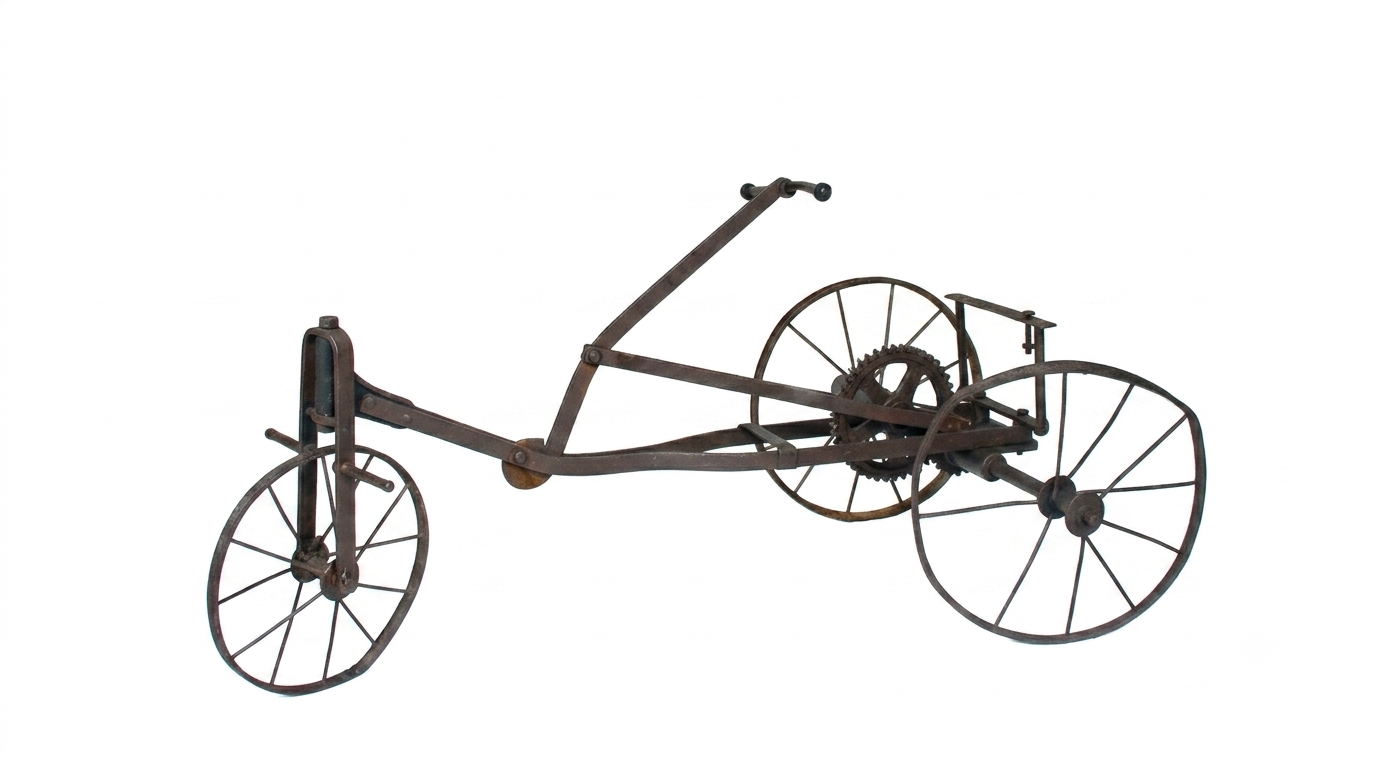
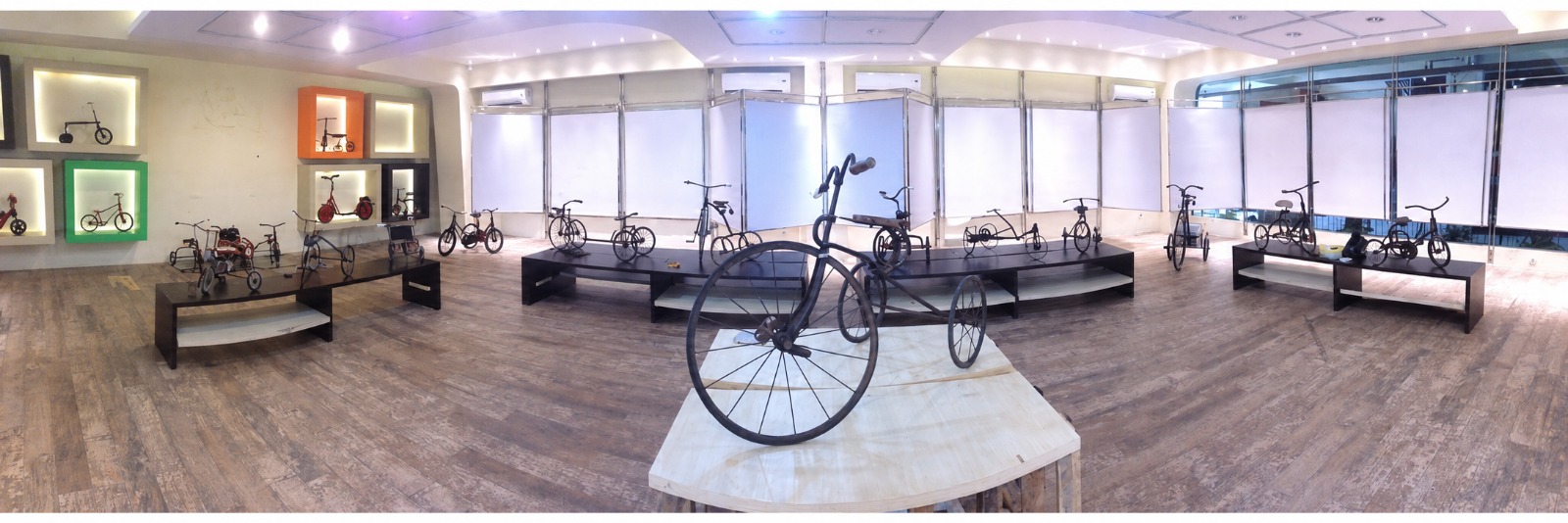
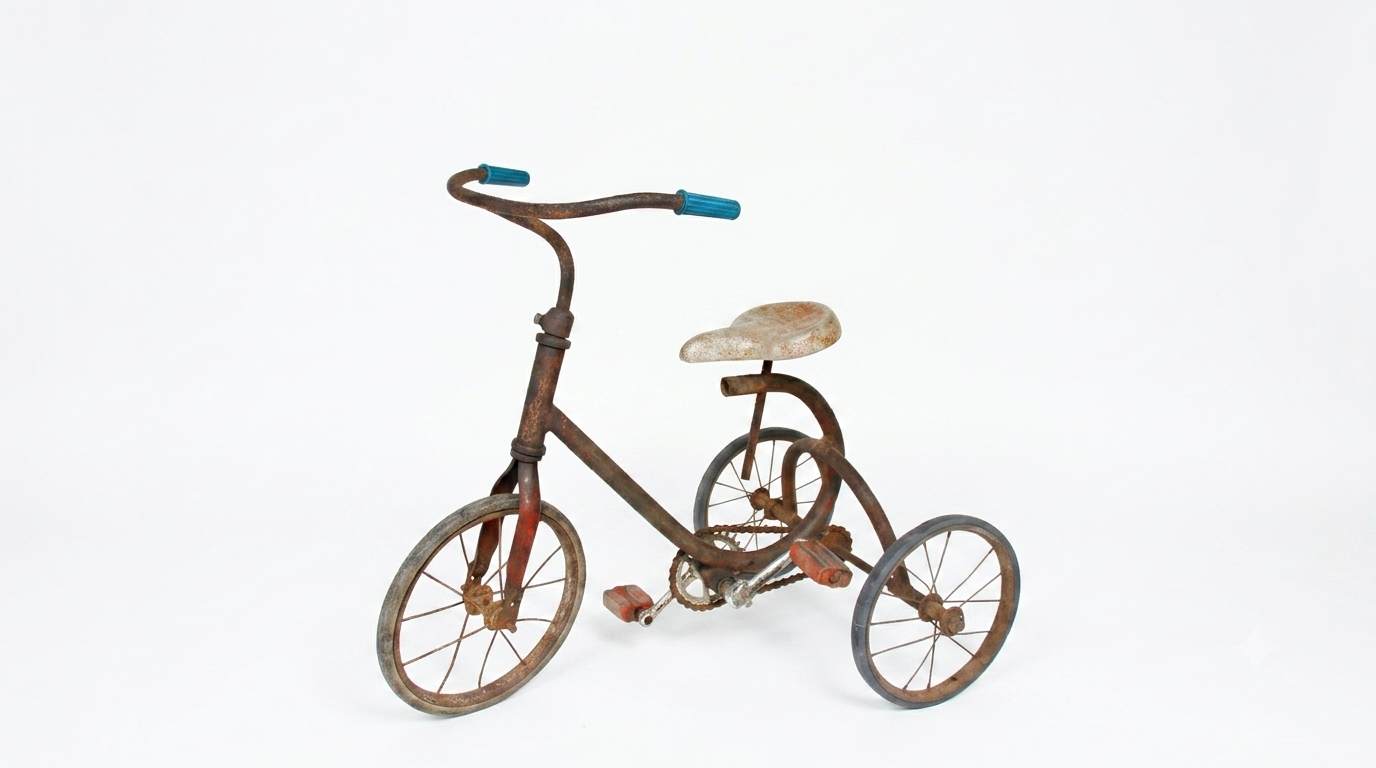
This historical artifact, curated within the Museum Jejak Industri Tricycle collection, represents a pivotal technological and aesthetic milestone from the late-Victorian era, spanning the transition between the late 1890s and the early 1900s. Characterized by an asymmetric configuration heavily influenced by the penny-farthing or high-wheeler concept, the vehicle features a dominant, direct-drive front wheel paired with two smaller, widely set rear wheels designed to provide lateral stability for the rider. The entire sasis is constructed from robust, heavy-gauge iron, displaying prominent signs of hand-forged or early cast craftsmanship, particularly evident in the crude joint connections, threaded axles, and the integrated, minimally curved steering bars that connect directly to the main head tube. Unlike later industrialized models that adopted chain-driven systems, this specimen utilizes a primitive direct-drive mechanism directly mounted to the front axle hub, retaining simple, unornamented crank arms that once accommodated basic foot pedals. The wheelset itself showcases a crucial evolutionary step in pre-industrial wheel design, employing tensioned radial wire spokes rather than solid wood or heavy cast-iron webs, although it still predates the standardized tangent-spoke engineering of the late industrial revolution. The saddle, now stripped of its original utilitarian padding, remains as a rigid iron extension of the main frame backbone, emphasizing functionality over rider comfort.
From the perspective of fine arts and academic design studies, this tricycle serves as a profound physical manifestation of functionalist pragmatism, acting as a precursor to the modernist design ethos of "form follows function." Stripped of any superfluous ornamentation or Victorian embellishments, its visual identity is derived strictly from mechanical necessity, showcasing an authentic, heavy iron oxide patina that blankets the entire metal surface. Rather than indicating mere degradation, this uniform rust patina is highly valued in contemporary material culture as a sculptural testament to time and decay, elevating the utilitarian object to a piece of industrial art. Within the academic framework of Practice-Based Research, the artifact acts as an essential archaeological link, visualizing the transition from the highly skilled, artisanal metalworking of localized blacksmiths to the standardized, mass-production capabilities of the early 20th century. Consequently, this object does not merely exist as a remnant of past transportation but stands as a vital historical bridge within the museum's narrative, capturing the rustic beauty and raw engineering spirit of the pre-industrial era.
Baca Selengkapnya
 TRICYCLE MUSEUM